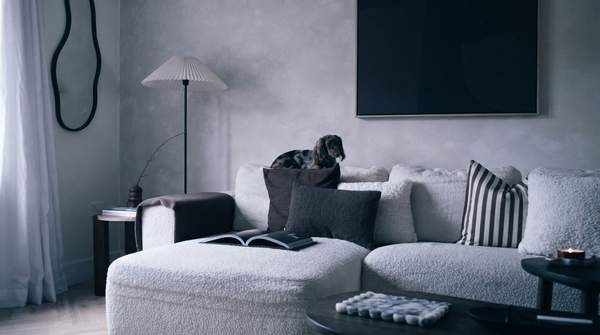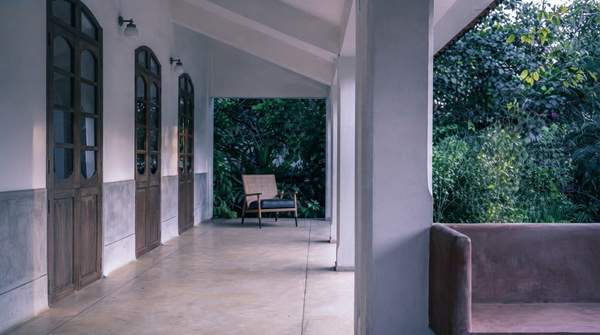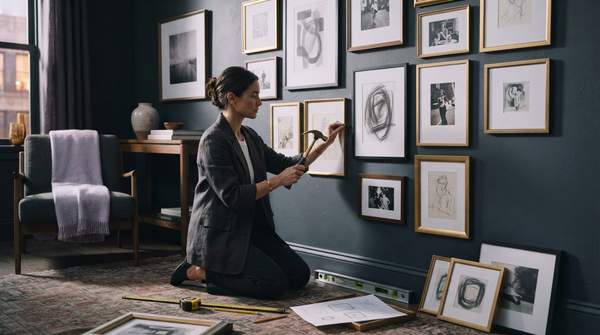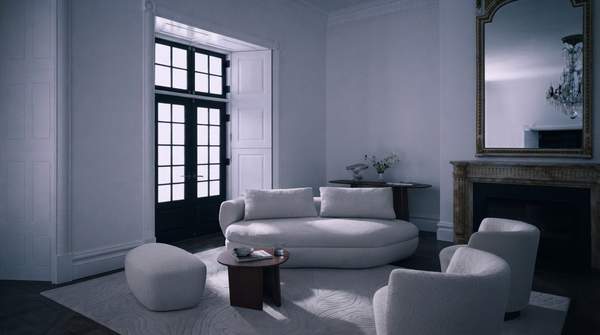
The fastest way to understand quiet luxury is to understand what it refuses to do: it refuses to shout. Design writers covering the movement converge on a single core idea—what an object is made of matters more than what it looks like at first glance. That inversion, material before appearance, is the philosophy in miniature, and it is also the basis for a practical test you can apply to any purchase, from a sofa to a wall finish. This article turns that test into a four-part decision framework, then walks through how to use it across the three layers of a room.
Understanding Quiet Luxury: Beyond the Buzzword
Quiet luxury has traveled from fashion runways into interiors, but in the home it describes something more durable than a trend. Writing for THELIFESTYLEDCO, Tedi Bezna frames it as a set of principles that can be applied "across any space, at any scale"—not a fixed look to be copied room by room. That distinction matters: a philosophy can guide your judgment long after a specific palette or silhouette has dated, which is precisely why the style appeals to homeowners who want a room to feel composed rather than decorated.
The aesthetic rewards patience rather than demanding attention. A limewashed wall, as the design publication House of Nuances observes, is not monochrome but "a surface that rewards prolonged attention." The same publication notes that its materials are chosen because they compound in quality over time. The Pacaso design team, in guidance on luxury interiors more broadly, makes the same point from another angle: above all, the space should feel timeless to the person who lives there, with each furnishing intentionally selected and placed. Quiet luxury takes that principle and gives it a materialist edge.
The Pillars of Quiet Luxury: Quality, Timelessness, and Intentionality
Three principles do most of the work. The first is material integrity. Bezna's guide is explicit that solid wood frames, natural stone, hand-woven textiles, and top-grain leather "hold up both physically and visually over time. They develop character. Fast furniture does not." The point is not that these materials are expensive, but that they age—gaining texture and patina where cheaper substitutes flatten, scratch, and sag into disposability.
The second pillar is timelessness: forms chosen for enduring proportion rather than for alignment with whatever is newly fashionable. This is where the style earns its "quiet"—a shape that will still feel right in a decade does not need the validation of a trend cycle, and it does not need to announce itself to be noticed.
The third pillar, intentionality, is the one that separates quiet luxury from mere good taste. House of Nuances puts it memorably: a quiet luxury room can contain many objects, "but none that are there by accident." Every item earns its place through a deliberate choice. The practical consequence is that the style asks more of your judgment than of your budget—an expensive object bought carelessly fails the ethos just as thoroughly as a cheap one.