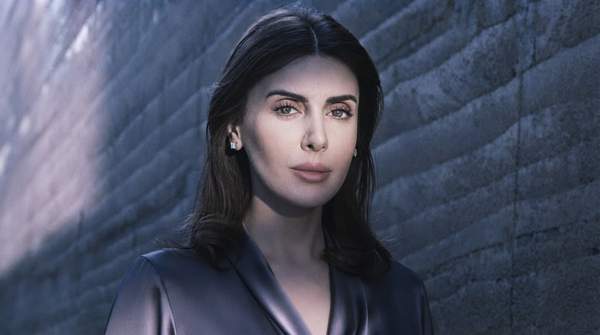
Gayane Umerova has become the central operator of Uzbekistan's cultural opening to the world, holding three converging positions: Head of the Department of Creative Economy and Tourism within the Administration of the President of Uzbekistan, Chairperson of the Uzbekistan Art and Culture Development Foundation (ACDF), and Chairperson of the National Commission of Uzbekistan for UNESCO Affairs. Through these roles she has directed a deliberate two-track strategy—projecting Uzbek art onto international platforms such as the Venice Biennale while consolidating heritage and institutions at home.
Introduction: Gayane Umerova's Vision for Uzbek Culture
Umerova, an Uzbek art critic and curator born in 1985, is described by ArtAsiaPacific's Elaine Ng as "orchestrating a cultural renaissance for Uzbekistan on the world stage." Her work is framed by a dual mission, in Ng's formulation: "to amplify Uzbek voices globally, while grounding their resonance deeply within their homeland." That framing captures the logic connecting what might otherwise look like unrelated projects—an auction partnership with Christie's, a national pavilion in Venice, a research project on Tashkent's modernist architecture.
Her institutional positions sit within a broader governmental context. According to the ACDF's own leadership profile, she contributes to implementing large-scale reforms pursued under President Shavkat Mirziyoyev, aimed at developing the cultural sphere, preserving national heritage, and strengthening the country's international standing. In other words, the cultural strategy she directs is explicitly aligned with state policy rather than operating as a purely independent curatorial agenda.
Leadership Roles and International Recognition
The formal architecture of Umerova's influence spans the presidential administration, a national foundation, and the country's UNESCO commission. Her UNESCO chairmanship, under the Cabinet of Ministers, dates to 2020, the same year she became executive director of the ACDF, where she had worked since 2017. Within the foundation, her responsibilities include protecting cultural heritage and museum collections, covering historical and cultural areas of Uzbekistan included in the World Heritage List.
International recognition has accumulated alongside the domestic mandate. She was made an Officer of France's Order of Arts and Letters in April 2025, an honor confirmed by both the ACDF and Vogue's profile of her. Uzbekistan awarded her the "Dustlik" Order of Friendship for her contribution to international cultural dialogue, also in 2025. Earlier markers include a 2013 prize from the Union of Artists of the Artistic Confederation of CIS countries for the project "Observations on the Invisible World," which explored the Islamic ornamental system in Central Asian art, and inclusion in The Culture Trip's 2016 list of influential women in Central Asian and Caucasian art. Vogue also notes she serves as a LACMA Global Ambassador.
Expanding Uzbekistan's Global Cultural Presence
The Venice Biennale is the clearest expression of the outward-facing track. Since 2021, Umerova has served as Commissioner of the National Pavilion of Uzbekistan at both the art and architecture editions of the Biennale, and she has been, in Ng's assessment, "the driving force behind her country's presence in both the architecture and art exhibitions." At Biennale Arte 2026 she presided over the national pavilion, "The Aural Sea," together with a collateral event, "Instruments of the Mind."
The Venice engagement did not emerge from nowhere. As her speaker biography for the Art for Tomorrow conference records, Umerova oversaw the first Uzbek contemporary art auction in partnership with Christie's in 2012, held at the Savitsky Museum in Nukus—an early experiment in placing Uzbek art before international buyers. She also played a pivotal role in bringing the exhibitions "Henry Moore: Master of Graphics" (2015) and "New Past: Contemporary Art from Britain" (2016) to Uzbekistan, reversing the direction of exchange by importing major international shows. The ACDF credits her with coordinating Uzbekistan's cultural programme at international exhibitions and forums including Expo 2025 Osaka.
Gayane Umerova's Cultural Initiatives: A Dual Strategy
Read together, her projects sort into two strategic pillars: building cultural capacity inside Uzbekistan and projecting Uzbek culture outward. The table below categorizes the documented initiatives under each pillar, showing how the domestic and international tracks reinforce one another rather than competing for attention.
| Strategic pillar | Initiative | Purpose and scope |
|---|---|---|
| Developing internal cultural infrastructure | "Tashkent Modernism XX/XXI" (launched 2019) | Ongoing research project documenting and protecting Tashkent's modernist architecture, accompanied by publications with Rizzoli New York and Lars Müller Publishers |
| Developing internal cultural infrastructure | Heritage and museum oversight at the ACDF | Protecting cultural heritage, museum collections, and World Heritage-listed areas of Uzbekistan |
| Developing internal cultural infrastructure | International exhibitions brought to Uzbekistan (2015–2016) | "Henry Moore: Master of Graphics" and "New Past: Contemporary Art from Britain" staged in the country |
| Expanding international presence | Christie's auction partnership (2012) | First Uzbek contemporary art auction, held at the Savitsky Museum in Nukus |
| Expanding international presence | Venice Biennale national pavilion (since 2021) | Commissioner of Uzbekistan's pavilion at both art and architecture editions, including "The Aural Sea" in 2026 |
| Expanding international presence | Expo 2025 Osaka cultural programme | Coordinating Uzbekistan's cultural presence at international exhibitions and forums |
The pattern is cumulative: each international appearance builds an audience and a network that makes the next one easier to mount, while domestic documentation and preservation work supplies the content those platforms showcase.
A Chronology of Influence: Key Milestones
Tracing Umerova's career chronologically shows a steady progression from curatorial projects to institutional power, with each role building the capacity for the next.
| Year | Milestone | Role and context |
|---|---|---|
| 2012 | First Uzbek contemporary art auction with Christie's | Oversaw the auction, held at the Savitsky Museum in Nukus—an early international engagement for Uzbek art |
| 2013 | CIS Artistic Confederation prize | Awarded for "Observations on the Invisible World," recognizing contributions to international cultural relations |
| 2017 | Joined the ACDF | Head of the budget management department, becoming Deputy Executive Director in November |
| 2019 | Launched "Tashkent Modernism XX/XXI" | Research project on modernist architecture, with commissioned publications by Rizzoli and Lars Müller |
| 2020 | Executive Director of the ACDF; UNESCO Commission chair | Appointments that consolidated national and international cultural leadership |
| 2021 | Venice Biennale commissioner | Began directing Uzbekistan's presence at both the art and architecture Biennales |
| 2025 | Order of Arts and Letters (France); Order of Friendship (Uzbekistan) | International and national recognition of her contribution to cultural dialogue |
Monitoring Uzbekistan's Cultural Ascent
Umerova's trajectory illustrates how a single figure, positioned at the intersection of presidential administration, a national foundation, and the UNESCO commission, can align cultural policy across domestic and international arenas. Her strategy is coherent rather than scattered: the same institutional apparatus that documents Tashkent's modernist architecture also stages the national pavilion in Venice. Readers can track the continued expansion of Uzbekistan's cultural influence by observing the frequency and prominence of its participation in major international cultural events and the ongoing development of its domestic cultural institutions. The measurable indicator to watch is Uzbekistan's presence at future global art biennials, cultural expos, and new collaborations with international museums.
This article explains the scope and strategic purpose of these initiatives based on sources retrieved in November 2026; it does not critically evaluate their outcomes, and later appointments or projects may have extended the picture described here.