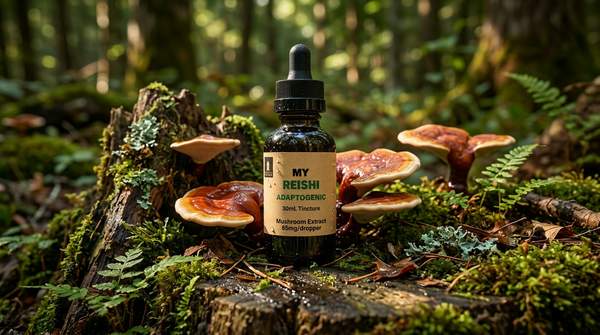
Reishi looks like it has been polished for a museum display. Its reddish-brown surface can shine like lacquer, and its broad, curving shape seems almost too elegant for a fungus growing from wood. You might be tempted to slice it up for dinner, until you learn that a mature specimen has about as much interest in the frying pan as the branch it grew on.
That tough texture helps explain why Reishi has such a long association with prepared liquids. Tea-like decoctions have figured in traditional uses for centuries, and modern functional collections include extracts and tinctures. At My Mushroom, the Reishi Mushroom Tincture turns that history into a simple 30 mL dropper-bottle product, with a name that people interested in this remarkable fungus will recognize immediately.
Beautiful, Glossy, and Stubbornly Woody
Reishi is a common name associated with several fungi in the genus Ganoderma. Many recognizable forms develop a glossy reddish or chestnut-brown upper surface, sometimes edged in a pale border when actively growing. Their fruiting bodies may resemble shelves or broad fans attached to woody material.
The smooth-looking top hides a dense interior. Mature Reishi can be tough and fibrous, with a texture far removed from the soft caps of ordinary supermarket mushrooms. The fungus is often associated with hardwood trees, and the visible body is part of an organism that grows within its woody surroundings.
The Latin name Ganoderma lucidum is widely encountered in books and product discussions, but Reishi naming has a complicated scientific history. Research has distinguished several related Ganoderma species that were once discussed under the same names. The common name is friendly; the taxonomy is a reminder that fungi enjoy making things a little more interesting.
That visual identity is easy to appreciate even without memorizing Latin. A shiny Reishi bracket looks almost made rather than grown, and its substantial structure suggests that it belongs to a different culinary category from tender mushrooms.
Why Reishi Was Traditionally Simmered
A chef might sauté Lion’s Mane because its flesh has an interesting texture. Reishi’s mature woody structure invites a different approach. Historical preparations frequently involved drying fungal material and simmering it in water to make a decoction, a liquid prepared by heating ingredients over time.