Building a better life does not always require a dramatic change. Sometimes, it begins with recognizing a habit that no longer serves you, finding a calmer way to start the morning, or making more room for the things that deserve your attention. Small adjustments can offer a more approachable path to meaningful change.
Architect of Days takes this practical perspective on personal growth. The independent, one-person studio creates short digital guide books for people navigating the realities of everyday life. Rather than relying on rigid routines or demanding productivity systems, its approach emphasizes simple ideas that readers can explore at their own pace. Each guide is designed to be read in an evening or two, making personal development feel more accessible.
Make Personal Growth Feel Manageable
Self-improvement can become overwhelming when every new idea comes with another routine, checklist, or goal to maintain. Architect of Days offers a different approach by focusing on specific challenges instead of attempting to transform every part of life at once.
This philosophy recognizes that everyday circumstances are rarely perfect. Energy fluctuates, responsibilities compete for attention, and plans sometimes fall apart. Progress needs to account for those realities rather than demand constant motivation.
A more manageable starting point is to identify one area where a small change could help. Instead of rebuilding an entire schedule, you might reconsider how you spend your downtime or look for a simpler way to begin the morning.
By keeping the focus narrow, it becomes easier to consider practical adjustments without treating personal development as another demanding responsibility.
Develop a Healthier Relationship With Screen Time
Digital distractions can make it difficult to stay present, particularly when checking a phone turns into an extended scrolling session. Architect of Days addresses this challenge through From Constant Scrolling to Calm Focus, its first guide book.
The guide explores how readers can move toward greater focus and reclaim more of their attention. Its approach fits the studio's broader philosophy of making small, thoughtful changes rather than introducing complicated systems.
For readers who want to put the ideas into practice through writing, The Focus Workbook provides a companion resource. It offers an additional way to reflect on focus and work toward a calmer relationship with attention.
The guide book can be used independently, so a workbook is not necessary to get started. Readers can choose the format that best suits their preferences and work through the material at a comfortable pace.
Find a Gentler Way to Start the Morning
The beginning of the day can influence how manageable everything that follows feels. Yet conventional morning routines often emphasize early wake-up times, elaborate habits, and tightly scheduled activities that may not suit everyone's circumstances.
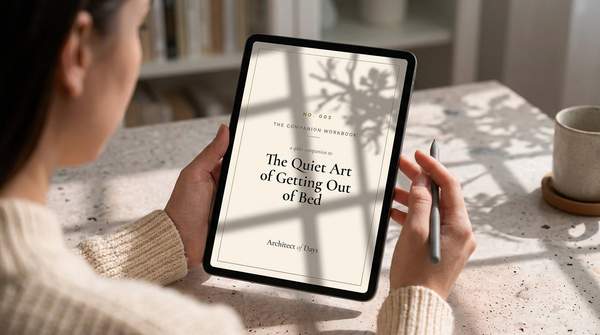
The Quiet Art of Getting Out of Bed, the studio's second guide book, takes a more approachable direction. It is designed for people who struggle with mornings and want practical, compassionate ways to make getting up feel easier.
Rather than requiring a complete morning routine, the guide focuses on small steps toward starting the day. This allows readers to consider what might work for their circumstances without comparing themselves with an idealized version of a productive morning.
Its companion, The Mornings Workbook, offers space to reflect on morning habits and consider more manageable ways to begin the day. As with the focus workbook, it is optional and can be used alongside the guide or separately according to individual preference.
Learn at Your Own Pace With Short Digital Guides
One of Architect of Days' defining features is the concise format of its guide books. Designed to be read in an evening or two, they offer a focused introduction to a particular challenge without requiring a lengthy commitment.
This format makes it easier to engage with an idea without adding another large project to an already busy schedule. Readers can take their time, revisit useful passages, and decide which suggestions make sense for their lives.
The emphasis is on applying what feels relevant rather than attempting to follow every suggestion. A single useful insight can provide a starting point for a change that develops gradually through everyday practice.
Because the guides are digital PDFs, readers can access them on compatible phones, tablets, laptops, and most e-readers, or print them at home. This flexibility allows the material to fit into different reading habits and daily routines.
Put Ideas Into Practice With Companion Workbooks
Understanding a habit is one thing; finding a practical way to change it is another. Architect of Days offers companion workbooks for readers who prefer a more hands-on approach.
The Focus Workbook accompanies the guide on screen time and attention, while The Mornings Workbook complements the guide about getting out of bed. Both provide opportunities to engage with the corresponding material through writing and reflection.
These resources are optional rather than essential additions. Someone who prefers reading can start with a guide book alone, while a reader who benefits from written exercises can choose the corresponding workbook.
The studio also offers bundled options for those who want related resources together. The Focus Set pairs the focus guide with its workbook, and the Mornings Set combines the morning guide with its companion workbook. The Library brings both guide books and both workbooks together in one download.
Having these options makes it possible to choose resources based on personal needs instead of committing to a larger collection from the beginning.
Choose a Starting Point That Fits Your Needs
A useful personal development resource should address a challenge that feels relevant to your life. Architect of Days keeps its collection focused on two everyday concerns: attention and mornings.
For someone who frequently loses time to scrolling, From Constant Scrolling to Calm Focus provides a starting point for reconsidering screen habits. For someone who finds getting out of bed difficult, The Quiet Art of Getting Out of Bed addresses a more immediate part of the daily routine.
Readers who want to explore either subject further can add the matching workbook. Alternatively, those interested in both areas can consider one of the bundles or the complete Library.
Architect of Days also provides the opening chapters of both guide books for free. Reading these samples offers an opportunity to become familiar with the material before purchasing a guide.
Build Better Days One Step at a Time
Meaningful change does not have to involve perfect routines or ambitious daily targets. It can begin by paying attention to one recurring difficulty and finding a realistic way to approach it differently.
Architect of Days supports this process through focused digital guide books, optional workbooks, and a philosophy that makes room for the imperfect nature of everyday life. Its resources encourage readers to explore practical adjustments without turning self-improvement into another measure of success or failure.
Whether the goal is to spend less time scrolling or make mornings more manageable, the first step is choosing an area where change would be useful. From there, a small idea can become a practical experiment, adjusted as needed to suit daily circumstances.
Visit Architect of Days to explore its guide books, read the free opening chapters, and find a resource that fits the kind of day you want to build.