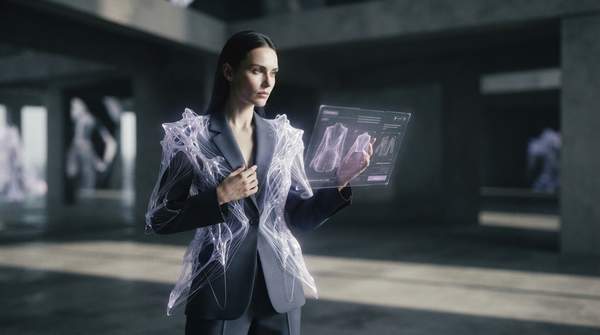
Artificial intelligence is reshaping the art of fashion forecasting, transforming a field once guided by elite editors and human intuition into a data-driven science. AI algorithms now assist the fashion industry by analyzing immense volumes of digital information to predict which styles, colors, and fabrics will capture consumer interest. This technological shift allows for more precise and comprehensive insights than traditional methods, enabling brands to understand emerging trends with greater speed and depth.
The AI Fashion Forecasting Model
The process of using artificial intelligence to predict fashion trends can be understood as a three-stage model. This framework begins with the collection of vast and varied raw data, moves to a sophisticated analysis where patterns and features are extracted, and culminates in the generation of actionable forecasts that can guide design, production, and marketing decisions.
Stage 1: Data Ingestion
The foundation of any AI forecast is the data it consumes. These systems ingest a wide array of information to build a comprehensive picture of the cultural and commercial landscape. AI-powered tools track consumer preferences by scanning social media platforms, e-commerce sites, and fashion blogs, according to one academic review. One system, for example, is designed to detect attributes like color, pattern, and size from images shared on social media and items listed on retail websites to gauge popularity in local and global markets. The forecasting company WGSN reports that its methodology involves consulting 2,800 third-party global data sources, including institutional, NGO, and media reports. This information is then triangulated with AI assistance to identify overarching macro trends.
Stage 2: AI Analysis and Feature Extraction
Once data is collected, AI employs advanced analytical techniques to find meaningful patterns. Machine learning algorithms process massive datasets in real-time, analyzing keywords, hashtags, and images to identify the rise of specific styles well before they achieve mainstream recognition. A key technique is computer vision, which allows AI to "see" and categorize clothing attributes in images. The fashion technology company Heuritech explains that its technology analyzes millions of images daily to assess the volume of a given trend, such as striped t-shirts. By quantifying a trend's past growth and evolution, the system can then predict its future trajectory, providing designers with real-time feedback on how a product is being received by different consumers in various markets.
Stage 3: Trend Prediction and Output
In the final stage, the analyzed data is synthesized into concrete predictions. These forecasts provide fashion houses with insights that can dramatically streamline their operations. By identifying trending styles early, AI can help compress the production timeline. According to the AI service provider FashionInsta, this process can be reduced from a traditional 18 months to as little as three months, from initial trend identification to products arriving in stores. This acceleration is a direct response to the rapid pace of social media, where trends can emerge and fade within weeks. The outputs help brands make more informed decisions about future collections, aligning their products with data-backed consumer demand.
Beyond Prediction: Sustainability and Personalization
The applications of AI in fashion extend beyond simply predicting the next popular silhouette. The technology also offers significant potential for improving sustainability within the industry. By providing more accurate demand forecasts, AI helps brands reduce overproduction, a major source of waste. Furthermore, machine learning can identify sustainable materials and manufacturing processes suitable for specific designs, guiding companies toward more environmentally responsible choices. AI-driven insights also support the circular economy by assessing the value of pre-owned items, which can make the resale market more accessible and efficient.
The Human Touch: Limitations and the Enduring Role of Experts
Despite the analytical power of artificial intelligence, human expertise remains indispensable in the fashion world. Current AI systems do not possess their own aesthetic perspective or an innate fashion sense, which limits their ability to satisfy the consumer's desire for genuine newness—a core driver of trends. The technology is a powerful tool for identifying patterns in existing data, but it cannot replicate human creativity or cultural intuition.
Experts must still interpret and curate the data-driven insights AI provides. As one industry professional noted, this is because trend forecasting requires a broader sense of the cultural and political climate and an understanding of how these forces translate into clothing. In a 2023 interview with The Guardian, Yael Koren, an expert in the field, emphasized this point, stating, “The role of human experts in interpreting and curating trends will continue to be crucial even as AI and data-driven models become more accurate.”
Integrating AI for Strategic Fashion Decisions
For fashion brands, the most effective strategy involves integrating AI-generated insights with the irreplaceable creativity and cultural understanding of human experts. This hybrid approach allows companies to leverage data for optimizing trend forecasts, enhancing operational efficiency, and reducing waste, while relying on human designers and curators to provide the creative vision and cultural nuance that resonate with consumers. By combining the strengths of machine and mind, the industry can make smarter, faster, and more sustainable decisions.
The success of this integration can be observed through tangible business outcomes. A key measurable indicator is the reduction in unsold inventory, as more accurate forecasting aligns production with actual consumer demand. Another is the speed of bringing new, accurately predicted trends to market, a critical advantage in a fast-paced industry.
Sources
- The Intersection of Artificial Intelligence and Fashion Forecasting — Scitechnol
- Ai and data — WGSN
- Trend forecasting with AI: Fashion's way forward — Heuritech
- AI fashion trend forecasting: the ultimate guide for brands — Fashioninsta