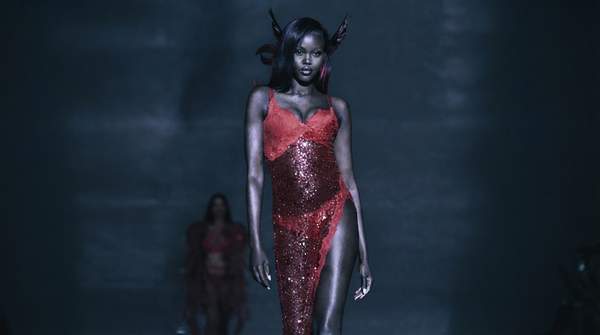
In Seoul, a humanoid robot sporting a tasselled blue ensemble and a cowboy hat recently strutted down a runway, presenting a new creation alongside human models. This event, part of the 'Mach33: Physical AI Fashion Show' on May 28, 2026, showcased the integration of advanced robotics into public performance. The show, organized by Galaxy Corporation, featured both human and robot models, marking a significant step in the public integration of artificial intelligence into creative industries, particularly within a Seoul fashion show that combined human models and robots.
Fashion has long been a domain of human expression and artistry, but now humanoid robots are taking center stage, performing alongside their human counterparts. This juxtaposition creates a tension between established human-centric artistry and emerging technological capabilities.
Companies are increasingly leveraging advanced robotics for innovative marketing and entertainment experiences. This approach potentially redefines the future of public performance and brand engagement by positioning AI as a direct conduit for corporate values and aspirational messaging.
A New Stage for Humanoid Performers
Galaxy Corporation opened Galaxy Robot Park in Seoul, described as the world's first robot theme park, according to India Today. The opening of Galaxy Robot Park signals a broader strategic move to embed robots into public entertainment and brand narratives. The humanoids featured in the show were manufactured by Unitree, a Chinese robotics company, also reported by India Today. The establishment of a dedicated robot theme park and the deployment of specialized humanoid technology signals a deliberate strategy to establish a new frontier in experiential entertainment.
Robots as Brand Ambassadors and Artistic Collaborators
A humanoid robot presented a creation during the fashion show in Seoul, as captured by Reuters. This robot wore a distinct tasselled blue ensemble with a cowboy hat, according to The Straits Times. Both robot and human models showcased performances conveying Galaxy Corporation's 10 core values. The integration of robots as performers, complete with distinct styling and corporate messaging, signals their emerging role as active brand ambassadors and artistic collaborators.
The integration of humanoid robots into the fashion show, alongside the opening of Galaxy Robot Park, indicates a deliberate, long-term strategy by Galaxy Corporation. This strategy aims to embed robots as central figures in entertainment and brand narratives, moving beyond one-off stunts to create sustained public engagement. By tasking robots with 'showcas[ing] performances conveying the company's 10 core values,' the 'Mach33' event positions AI not just as a visual spectacle, but as an active embodiment of corporate identity.
The positioning of AI as an active embodiment of corporate identity suggests a future where brand ethos is directly articulated by artificial entities. The description of the event as a 'physical AI' fashion show highlights a strategic emphasis on the tangible, embodied presence of artificial intelligence. The tangible, embodied presence of artificial intelligence differentiates it from purely digital or virtual AI experiences, signaling a new frontier for immersive, real-world brand engagement. The use of Chinese-made Unitree humanoids in this high-profile Seoul fashion event also underscores a globalized supply chain for advanced robotics. The globalized supply chain for advanced robotics indicates that the future of AI-driven entertainment and marketing will increasingly rely on international technological partnerships rather than purely domestic innovation.
Companies like Galaxy Corporation, by entrusting humanoid robots with the communication of their core values, are pioneering a future where brand identity is directly articulated by AI, raising critical questions about authenticity and human connection in marketing. The 'Mach33' show demonstrates that the fashion industry is not just adopting AI as a technological tool, but is actively leveraging it to redefine what constitutes a 'performer' and 'brand ambassador.' The redefinition of 'performer' and 'brand ambassador' sets a precedent for how other sectors might integrate artificial entities into their public-facing roles. By the end of 2026, Galaxy Corporation's continued investment in 'physical AI' initiatives will likely solidify its position in the evolving entertainment and marketing sectors.
What is the future of fashion shows with robots?
The future of fashion shows with robots appears to involve a more integrated and strategic role for AI. Events like 'Mach33' demonstrate that robots are moving beyond simple display to become active communicators of brand values and emotional conduits. Galaxy Corporation's concurrent launch of the world's first robot theme park in Seoul highlights a long-term vision to embed robots deeply into public entertainment and brand storytelling, suggesting a new era of immersive experiences.
Will robots replace human models in fashion?
While robots are gaining prominence in fashion shows, the 'Mach33' event featured both human and humanoid models, suggesting a collaborative rather than a purely replacement role in the immediate future. The integration of human and humanoid models allows for new forms of creative expression and brand messaging, but also introduces a redefinition of roles for traditional human models and artists. The ongoing tension between human artistry and technological performance continues to evolve.
What technology is used in Seoul fashion shows 2026?
The 'Mach33' fashion show in Seoul utilized humanoid robots manufactured by the Chinese company Unitree. These 'physical AI' entities are designed for embodied interaction and performance, distinguishing them from purely virtual or digital AI. The emphasis on tangible, physical presence allows robots to engage with audiences in real-world settings, offering a new dimension to brand engagement and entertainment experiences.