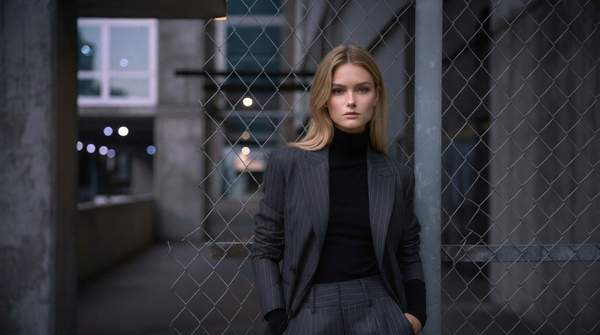
The power suit has never been just clothing. Born from women's need to be seen in rooms that weren't built for them, it has spent a century mirroring every shift in gender, work and identity—morphing from Coco Chanel's 1920s tweed to exaggerated 1980s shoulders, sleek 1990s minimalism, and today's gender-fluid, pastel-palette tailoring. Tracing that journey reveals a garment that changed each time the culture around it did.
The Genesis of Power: Early Suiting for Women (1920s-1970s)
Power dressing for women begins, by most accounts, with Chanel. The Style Historian credits her with the earliest iterations in 1925: tweed suits pairing a tight skirt with a collarless button-up jacket, finished with braid trim, metallic buttons and fitted sleeves. Crucially, these were deliberately masculine borrowings—the tweed was a material commonly used in men's sportswear, and the jacket borrowed its very structure from menswear.
The motive was practical. Chanel is believed to have designed the first suit for women adapting to a changed lifestyle after World War I pushed women into more male-dominated spaces. The suit wasn't a statement of identity so much as a tool of participation: a way for women to move through worlds that expected tailored seriousness.
Half a century later, high fashion took the idea further. The curriculum project Women & the American Story, hosted by the New-York Historical Society, notes that Yves Saint Laurent introduced the female tuxedo, feminizing a powerful masculine outfit. But there's an important catch: those high-fashion designs were not accessible to most working women. Only a few wealthy women in powerful positions could buy and wear them to work, though the looks inspired more affordable department-store versions that professional women emulated in offices across the United States.
The Iconic 1980s: Corporate Ambition and Exaggerated Silhouettes
Then came the era everyone pictures. The 1980s power suit was architecture: shoulders built up with padding for a broad, upright presence, chests shaped with substantial internal canvas, medium-width lapels—generally between 3.5 and 4 inches—and fuller, high-rise, often pleated trousers. The overall silhouette, as menswear historians describe it, was one of authority and quiet confidence.
For women, the exaggerated proportions carried a sharper message. History Is Now Magazine describes the 1980s power suit as symbolizing confidence, authority and a break from traditional gender roles in the workplace—a garment worn by women climbing the corporate ladder. It was seen by some as a necessary tool for navigating male-dominated environments: dress the part, be taken seriously.
The designers who defined the moment became household names. Giorgio Armani and Donna Karan grew synonymous with the power suit, which became a staple for women in corporate settings. The suit wasn't subtle, and that was the point—its boldness and structured lines broadcast a message of authority before its wearer said a word.
The 1990s Shift: Minimalism and Refined Authority
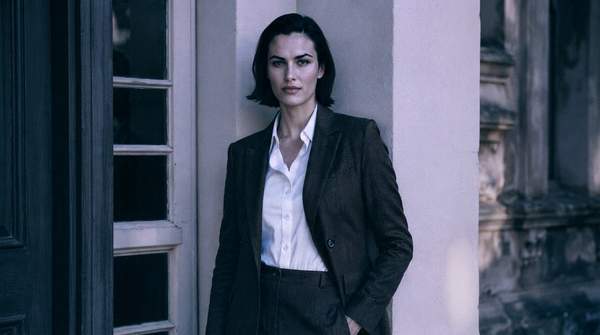
The 1990s pulled the suit back into its shell. According to History Is Now Magazine, the exaggerated features of the 1980s were toned down, giving way to more minimalist and streamlined designs—a shift toward sleek corporate power and professionalism without excess.
The context changed too. This was the decade that saw the rise of business casual, which could easily have made the suit obsolete. Instead, the power suit survived as a key element of professional wardrobes, just in a quieter register. Authority no longer required armor; it could be conveyed through clean lines and restraint. The shoulder pad shrank, but the underlying idea—that tailoring signals seriousness—endured.
The Power Suit's Journey: A Chronological Timeline
To see the whole transformation at a glance, trace the suit era by era—each silhouette answering a different cultural question.
| Era | Key Design Features | Cultural Significance & Context | Influential Designers/Figures |
|---|---|---|---|
| 1920s-1970s | Tweed suits with tight skirts, collarless button-up jackets, braid trim, metallic buttons; the feminized female tuxedo | A practical tool for women entering male-dominated spaces after WWI; high-fashion versions largely inaccessible to working women, but inspired affordable copies | Coco Chanel (1925); Yves Saint Laurent (female tuxedo) |
| 1980s | Padded, built-up shoulders; substantial internal canvas in the chest; medium-width lapels (3.5-4 inches); fuller, high-rise, often pleated trousers | Symbolized confidence, authority and a break from traditional gender roles; seen by some as a necessary tool for navigating male-dominated workplaces; a corporate staple | Giorgio Armani; Donna Karan |
| 1990s | Exaggeration toned down; minimalist, streamlined designs | Reflected sleek corporate power and professionalism without excess; survived the rise of business casual as a wardrobe staple | Legacy of the 1980s houses carried forward |
| 2000s-Today | Fluid lines, pastel colors, floral patterns; boxy fits, loose tailoring, neutral palettes, multi-use garments, size-inclusive cuts with minimal shape differentiation | A shift from assimilation to individuality and inclusivity; designs serve people rather than binary categories, validating a broad spectrum of gender identities | Stella McCartney; Alexander McQueen; Phoebe Philo; Telfar; No Sesso; H&M "Unisex"; Zara "Ungendered"; PULL&BEAR |
Contemporary Power: Gender Fluidity and Self-Expression (2000s-Today)
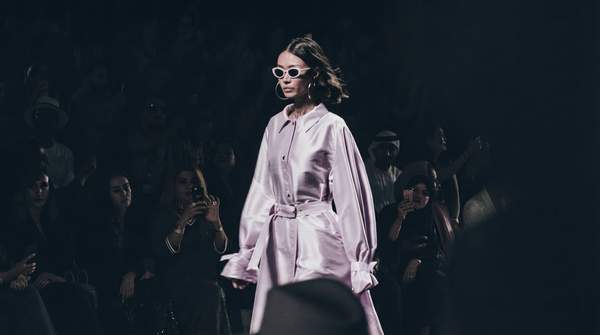
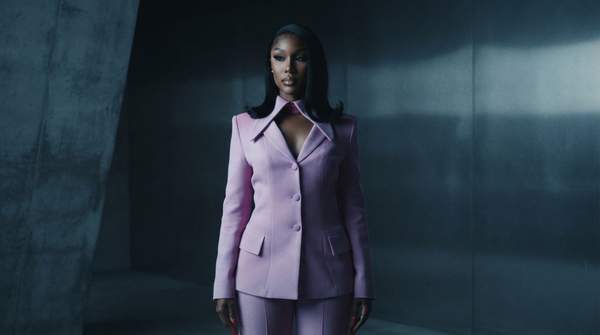
Today's power suit has loosened its grip on the masculine template. Writing for Meer, Mariana Carrera Díaz de Ita notes that designers like Stella McCartney, Alexander McQueen and Phoebe Philo have reinterpreted the suit's core elements—its boldness, structured lines and message of authority—into designs that embrace inclusivity and individuality. These modern power suits frequently combine masculine and feminine elements, incorporating pastel hues, floral motifs, and flowing silhouettes, departing from the stiff, structured forms prevalent in the 1980s.
The deeper shift is philosophical: design grounded in real bodies rather than idealized binary ones. Writers on inclusive fashion point to brands like Telfar and No Sesso leading a movement whose pieces feature loose tailoring, neutral palettes and versatile cuts that look equally at home on a non-binary person as on someone who identifies as cisgender. Other outlets document the same momentum across the market: boxy fits and fluid silhouettes suited to a range of body types, oversized blazers, unisex tailoring, and mainstream experiments like H&M's "Unisex" and Zara's "Ungendered" lines. When fashion reflects a broad spectrum of gender identities, the argument goes, it sends a message that everyone belongs.
From Uniform to Canvas: The Evolving Cultural Meaning of the Power Suit
What links Chanel's 1925 tweed to a gender-neutral oversized blazer? Not the silhouette—that has swung from tight skirt to padded shoulder to fluid boxy fit. It's the suit's function as a cultural instrument. In the 1920s, it let women adapt to a changing lifestyle. In the 1980s, it was armor for corporate ambition, a necessary tool for women navigating male-dominated environments. In the 1990s, it traded excess for understated professionalism. Today, it has become a canvas for identity itself.
That trajectory—from assimilation to self-expression—is the real story. The 1980s suit asked women to borrow masculine codes to gain entry. The contemporary suit dissolves the codes altogether, blending masculine and feminine details and serving people rather than categories. Each era's design choices answered its own cultural moment; the suit's constant is that it always answered.
Embracing Evolving Power: The Suit as a Reflection of Identity
Readers should recognize the power suit as a dynamic garment that continually adapts to societal change, serving as a tool for expressing evolving gender roles and individual identity rather than a fixed corporate uniform. Its history suggests it will keep changing as the culture does. The clearest way to watch that continue: the continued presence of diverse, inclusive and gender-fluid tailored designs in fashion collections and public figures' attire. As long as runways and red carpets keep featuring tailoring that serves people across the gender spectrum rather than one binary ideal, the suit's century-long transformation remains in motion.
Sources
- The History of the Female Power Suit — History is Now Magazine, Podcasts, Blog and Books | Modern International and American history
- The history of power dressing — The Style Historianᵀᴹ
- Power Dressing - Women & the American Story
- A Brief History of the Modern Suit: How Style Has Evolved Since 1950 — Samuelbaronclothiers
- MEDIUM
- The Rise of Gender-Neutral & Fluid Fashion: Breaking Down Traditional Style Boundaries — Anuprerna Artisans | Discover Sustainable Handwoven Fabrics