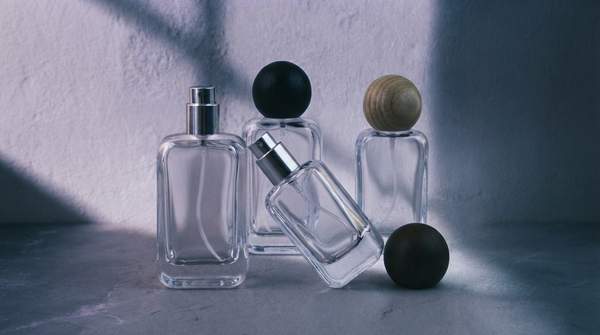
Perfume selection usually starts with the fragrance counter: which bottle is flattering, on-trend, or "you." The science of scent suggests a better starting point. Because smell is wired directly into the brain's emotion and memory circuitry, a personally reminiscent scent produces stronger positive feelings than a merely pleasant one. That means the most emotionally reliable perfumes are the ones connected to your own memories — and with a structured process, you can find them on purpose rather than by accident.
The Power of Scent: Unlocking Emotional Memories
The famous "Proustian moment" — when an unexpected smell pulls a whole chapter of life back into view — has a measurable basis. In a study by Matsunaga and colleagues, adults aged 21 to 38 who smelled a perfume personally reminiscent of their own past experienced more positive emotion, greater comfort and happiness, and reduced anxiety compared with a pleasant fragrance that carried no personal memory for them. The lesson for perfume buyers is direct: generic pleasantness is not the same as emotional resonance.
Writing for the fragrance house Les Soeurs de Noé, Nadia Benaisa frames the same insight from the consumer side: people often ask which notes are seductive or which perfume suits their personality, but "fragrance may be more interesting when we allow some of those questions to remain open." A perfume, she argues, does not need to mean the same thing to everyone — its meaning is built from the memories it carries, including the one attached to the first day you wore it.
The Neuroscience Behind Scent-Evoked Emotions
Smell owes its emotional force to anatomy. Unlike sight, sound, touch and taste, smell reaches the brain's memory and emotion centers without intermediate processing: airborne molecules interact with the olfactory bulb, which has direct connections to the amygdala — the structure that processes emotion — and the hippocampus, which stores long-term memories.
Sandeep Robert Datta, a professor of neurobiology at Harvard Medical School, notes that this wiring reflects smell's ancient role: our ancestors used odor to map their surroundings and remember where they'd been, which is "why all those structures are so intimately connected, and why odor memories are so evocative." Even though human smell is less acute than a bloodhound's, Datta says, it is "deeply tied to our cognitive centers, our emotional centers, and our memory centers."
That direct route explains a distinctive feature of odor memories: their immediacy. Because olfactory processing connects directly to the amygdala–hippocampal complex, the emotions tied to an odor-evoked memory can arise the moment the scent is perceived — sometimes, researchers describe, before you consciously understand why you feel that way. This is the phenomenon of "emotional primacy." The heart-racing jolt from a scent tied to an exhilarating past episode arrives first; the recognition of its origin comes second. For a fragrance wardrobe, that immediacy is precisely the effect worth designing around.
Your Personalized Scent Map: A Decision Framework
A scent map is a simple record that connects each desired emotional state to one of your own memories, the key smells inside that memory, and the fragrance notes you can search for as a result. Research on odor-evoked memory supports the logic: the emotional payoff comes specifically when a scent is tied to your autobiographical past. The table below shows the four-step process with a worked example; the example rows illustrate the method — your own entries will come from your memories.
| Step | What you do | Worked example |
|---|---|---|
| 1. Choose a desired emotion or state | Name one feeling you want a perfume to support — comfort, energy, confidence, calm. | "Calm and settled on stressful workdays." |
| 2. Recall a specific personal memory with that feeling | Summon a single vivid scene where you genuinely felt it; avoid generic "nice" places. | Reading in grandmother's kitchen on rainy afternoons. |
| 3. Isolate the key scents within that memory | List the actual smells present in the scene, not what you think you should enjoy. | Baked goods, warm spices, a hint of clean linen. |
| 4. Translate each scent into fragrance notes and families | Convert each remembered smell into a searchable note (gourmand, spice, soft musk) to guide sampling. | Vanilla and warm-spice notes; soft, powdery bases. |
Repeat the process for three or four desired states — energy, comfort, confidence — and you will have a map in which every entry is anchored to a real memory rather than a marketing description. The framework deliberately starts from the feeling and works backward, because emotional primacy means the right scent produces the feeling before you can explain why.
Translating Memories into Fragrance Notes
The final step of the map is what makes it usable in a shop. Perfumes are built in layers: the top notes form the first impression, the middle notes are the heart of the fragrance, and the base notes are the lasting impression — a structure that lets a scent develop over time, much as memories do. Marija Ivic, writing for the fragrance house Bisou Memoire, notes that many people already choose perfumes that remind them of a loved one, a place they visited, or a significant moment; what the scent map adds is doing this systematically, matching each remembered smell to the corresponding note family.
Widely used mood associations can serve as a starting vocabulary when your memory smells are hard to name. Aromatherapy tradition, as summarized by Bisou Memoire, associates lavender with calming effects and citrus scents like lemon and orange with energy and improved mood; florals such as rose and jasmine are often linked to romance and relaxation, while spicy scents like cinnamon and clove suggest warmth and comfort. Research on essential oil aromas points in similar directions for some notes: peppermint significantly enhanced memory and alertness in one study, while ylang-ylang increased calmness in another, though findings on cognition and mood are specific to those tested conditions. Treat these as search terms to test against your own memories — a shared association only becomes yours if it maps onto something you have actually lived.
Building Your Emotional Fragrance Wardrobe
Once your map exists, shopping changes character. Instead of asking what smells good, you sample with a hypothesis: this vanilla-and-spice perfume should reproduce the calm of that kitchen. Test the hypothesis the way you would test any scent — on skin, over hours, noting how top notes give way to the base — but also note the emotional response honestly, including whether the feeling arrives before you can explain it. Les Soeurs de Noé's practical guidance on wardrobe-building emphasizes owning with purpose rather than accumulating bottles; the scent map supplies that purpose, giving each bottle a defined emotional job.
Layering adds a further option. Because perfumes unfold in top, heart and base stages, you can combine a scent that carries your memory with one that carries a complementary mood association, building toward the emotional effect you mapped. Start small: a scent map with three or four well-tested entries, each verified on skin, is worth more than a shelf of untested bottles.
Curate Your Collection, Elevate Your Mood
Readers should intentionally select perfumes by mapping desired emotional states to personal scent memories and corresponding fragrance notes. The evidence for this approach is the finding that personally reminiscent perfumes produced more positive emotion, greater comfort and happiness, and reduced anxiety than pleasant scents without personal meaning — an effect rooted in smell's direct line to the amygdala and hippocampus. The measurable indicator of success is a fragrance collection that consistently evokes specific positive emotions and enhances personal well-being: if a perfume you selected through your scent map reliably returns the feeling you mapped to it — before you can even name why — the method is working, and the next entry on your map is the one to test.
Sources
- The Connections Between Smell, Memory, and Health — Magazine
- The Role of Odor-Evoked Memory in Psychological and Physiological Health - PMC
- The Psychology of Fragrance: Why Scent Changes How We Feel — Les Soeurs de Noé
- The Power of Scent: How Smell Influences Memory - Neuro Science
- Influence of Fragrances on Human Psychophysiological Activity — PMC