Ritani Gemstone Tennis Bracelets Play With Alternating and Half-and-Half Color
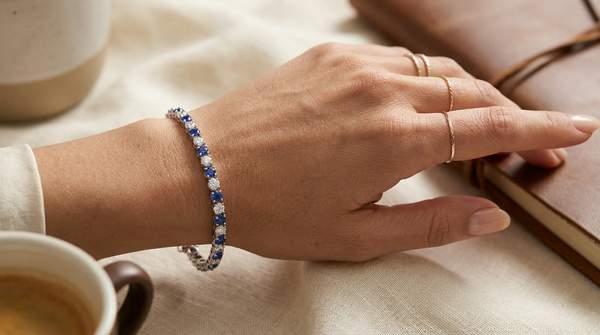
A sapphire-blue stone followed by a white diamond, then another blue stone. The pattern continues around the wrist, creating a regular exchange between color and sparkle. Now imagine the same gemstones arranged differently, with the sapphires grouped together on one portion of the bracelet and the diamonds on the other.
Those two designs make very different impressions, and Ritani offers both within its gemstone tennis-bracelet selection. Its sapphire, ruby, and emerald combinations introduce color into the familiar continuous line of a tennis bracelet, while alternating and half-and-half arrangements give shoppers another decision beyond gemstone choice.
The Pattern Can Be as Important as the Color
A traditional diamond tennis bracelet draws its appeal from a continuous succession of stones. Similar diamonds repeat around the wrist, giving the jewelry a consistent visual rhythm.
Introducing colored gemstones changes that rhythm. Each sapphire, ruby, or emerald becomes a noticeable point within a line that also includes diamonds.
The way those gemstones are distributed determines how the eye experiences the bracelet. An alternating pattern repeats the color across the design, while a half-and-half arrangement places the contrasting stone types into larger sections.
Ritani’s tennis-bracelet collection includes both treatments. The assortment allows someone drawn to a particular gemstone color to decide how prominently and how frequently it should appear.
That choice can be surprisingly expressive. The stones themselves may be similar across two bracelets, yet their arrangement gives each design a distinct personality.
Alternating Stones Create a Regular Pulse of Color
An alternating gemstone tennis bracelet places colored stones and diamonds in a repeated sequence. The eye moves between the gemstone hue and the brighter white reflections of the diamonds.
Ritani offers Alternating Sapphire & Lab-Grown Diamond Tennis Bracelets in which blue gemstones recur along the bracelet. The design creates a recognizable blue-and-white pattern rather than one uninterrupted color.
The alternating treatment can make the contrast particularly noticeable because neither stone type occupies one large section. Each colored gemstone participates in the overall rhythm, creating repeated accents across the wrist.
Ritani also carries Alternating Ruby & Lab-Grown Diamond Tennis Bracelets. The red-and-white combination produces a warmer, more assertive visual effect than blue sapphires against diamonds.
An alternating emerald design introduces green into the same basic construction. Its appearance depends on the individual gemstones and setting, but the sequence remains an important part of the finished style.
The approach can suit someone who likes the familiar sparkle of a tennis bracelet while wanting a clearly visible color pattern. The diamonds remain an integral part of the design, and the colored stones repeatedly interrupt their reflections.
Half-and-Half Makes a Bolder Division
Ritani’s Half & Half Sapphire & Lab-Grown Diamond Tennis Bracelet uses another arrangement. Instead of distributing the blue stones throughout the entire line, the design groups sapphires and diamonds into contrasting sections.
That creates a more pronounced division between the gemstone colors. One part of the bracelet emphasizes sapphire blue, while the other presents the white reflections of lab-grown diamonds.
As the bracelet moves around the wrist, the visible balance can change. Depending on its position, one gemstone group may appear more prominent from a particular viewing angle.
This gives the half-and-half design a different appeal from an alternating pattern. It feels less like a repeated two-color sequence and more like two complementary gemstone sections sharing one bracelet.
Ritani also offers Half & Half Ruby & Lab-Grown Diamond Tennis Bracelets, bringing the same arrangement to a red-and-white combination.
The design can be attractive to someone who loves colored gemstones but still wants a substantial section of classic diamond sparkle. The contrast comes from the larger composition rather than from individual stones taking turns.
Sapphire Blue, Ruby Red, or Emerald Green?
Once the arrangement is chosen, gemstone color gives the bracelet another distinct identity.
Blue sapphires create a cool-toned contrast with diamonds. The familiar blue-and-white combination can feel particularly defined, especially when the stones repeat in an alternating line.
Rubies introduce red, creating a warmer and more striking color relationship. In a half-and-half arrangement, the grouped red gemstones can become an especially prominent portion of the bracelet.
Emeralds offer a different character through their green coloration. Ritani’s assortment includes both alternating and half-and-half emerald-and-lab-grown-diamond bracelets, allowing the same distribution decision to be considered in green.
The gemstone color can also influence how the bracelet works with jewelry already owned. Someone who wears a sapphire ring may appreciate blue accents at the wrist, while an emerald bracelet could add a distinctive green element to an otherwise diamond-focused collection.
There is no need to assign a fixed meaning to each color. The choice can be made entirely on visual preference and the jewelry someone enjoys wearing.
Ritani’s gemstone bracelet selection provides enough variation to compare the combinations without reducing the decision to one universal favorite.
Setting Style Changes the Outline of Each Stone
Color and arrangement are prominent, but the setting can alter the finished appearance as well.
Ritani carries selected gemstone-and-lab-grown-diamond tennis bracelets in traditional prong arrangements and bezel-set versions. Three-prong designs and bezel settings appear among its sapphire and ruby combinations.
Prongs hold individual stones while leaving much of their visible outline exposed. The repeated settings contribute to the characteristic linked appearance of a tennis bracelet.
A bezel surrounds a stone with a metal rim. That framing introduces another visible element around the gems, making the jewelry’s construction more apparent.
The treatment can be particularly noticeable in an alternating design. Each colored gemstone and diamond has its own metal frame, so the pattern includes the surrounding metal as well as the stones.
Ritani’s Bezel Set Alternating Sapphire & Lab-Grown Diamond Tennis Bracelet offers this effect in a blue-and-white combination. A Bezel Set Half & Half Sapphire & Lab-Grown Diamond Tennis Bracelet provides the corresponding grouped arrangement.
These options create a useful second comparison after the color pattern is decided. The shopper can consider whether they prefer a prong-set line or the more clearly outlined stones of a bezel design.
Carat Weight Changes the Presence of the Pattern
Ritani lists gemstone-and-diamond tennis bracelets in multiple carat total weight options. The exact selections depend on the bracelet and setting style.
Carat total weight describes the combined weight of the stones in the piece. It does not describe one individual gemstone or guarantee that all bracelets with a similar total will look identical.
That distinction becomes important when comparing colored arrangements. A bracelet with larger stones may make the alternating sequence more visually pronounced, while a smaller-stone version can produce a finer line of color.
The setting also contributes to the overall appearance. A bezel frame adds visible metal around the stones, while a prong arrangement presents a different outline.
Ritani offers selected alternating and half-and-half designs in 14kt and 18kt gold configurations. Available gold color, weight, and setting combinations vary by product.
Rather than deciding on carat weight independently from the design, consider the two together. The desired result may be a delicate line with repeated gemstone accents or a more prominent bracelet whose color pattern is immediately noticeable.
Consider the Bracelet Beside Your Other Jewelry
A colored tennis bracelet can create a focal point when worn alone. Its continuous line provides familiar diamond-jewelry structure, while the gemstones contribute the color that sets it apart.
An alternating sapphire bracelet may work beautifully beside simple white-metal jewelry, where its blue-and-white pattern remains the most noticeable detail. A ruby version can introduce a stronger warm accent.
Half-and-half designs create another styling possibility. Their separate gemstone sections can produce a changing impression as the bracelet rotates, allowing either color to become more visible.
Someone who already owns a traditional diamond tennis bracelet may find this especially appealing. The colored design provides a different visual experience without moving into an entirely unfamiliar bracelet form.
The choice also works for a first tennis bracelet. A person who prefers colored gemstones may find the mixed-stone approach more personally appealing than a line composed exclusively of diamonds.
The most useful decision is which color relationship and pattern you would want to keep wearing. That preference should guide the final selection more than the assumption that a tennis bracelet must contain only white diamonds.
Frequently Asked Questions
What is an alternating gemstone tennis bracelet at Ritani?
Ritani’s alternating gemstone tennis bracelets place colored gemstones and lab-grown diamonds in a repeated sequence. Sapphire, ruby, and emerald combinations appear within its gemstone bracelet assortment.
What does half-and-half mean in Ritani tennis bracelets?
A half-and-half Ritani tennis bracelet groups colored gemstones and diamonds into contrasting portions rather than repeating them alternately throughout the design. The available examples include sapphire, ruby, and emerald combinations with lab-grown diamonds.
Does Ritani offer emerald tennis bracelets with diamonds?
Yes. Ritani offers alternating and half-and-half emerald-and-lab-grown-diamond tennis bracelets. Selected styles are available with different settings and carat total weight options.
Can I choose different carat weights for a Ritani gemstone tennis bracelet?
Yes. Many Ritani gemstone-and-diamond tennis bracelets have multiple carat total weight configurations. The available weights depend on the specific design and setting.
Are Ritani’s colored tennis bracelets available in bezel settings?
Yes. Ritani carries selected sapphire, ruby, and emerald combinations in bezel-set designs as well as prong-set arrangements. The availability of a particular color and pattern depends on the individual bracelet.
Find Your Favorite Color Rhythm
Alternating stones create repeated flashes of color between diamonds, while half-and-half arrangements bring two gemstone sections into one continuous bracelet. Ritani offers both approaches in sapphire, ruby, and emerald combinations, with additional differences in setting and carat weight.
Find the gemstone tennis bracelets that match your preferred color pattern, then compare the available settings and sizes to choose the version you want around your wrist.